Amersham, Buckinghamshire — covering Bucks, Herts, Surrey, Berks & London
charliebjoyce98@gmail.com 07777 722212
Evergreen Tree Care
07777 722212Get Free Quote
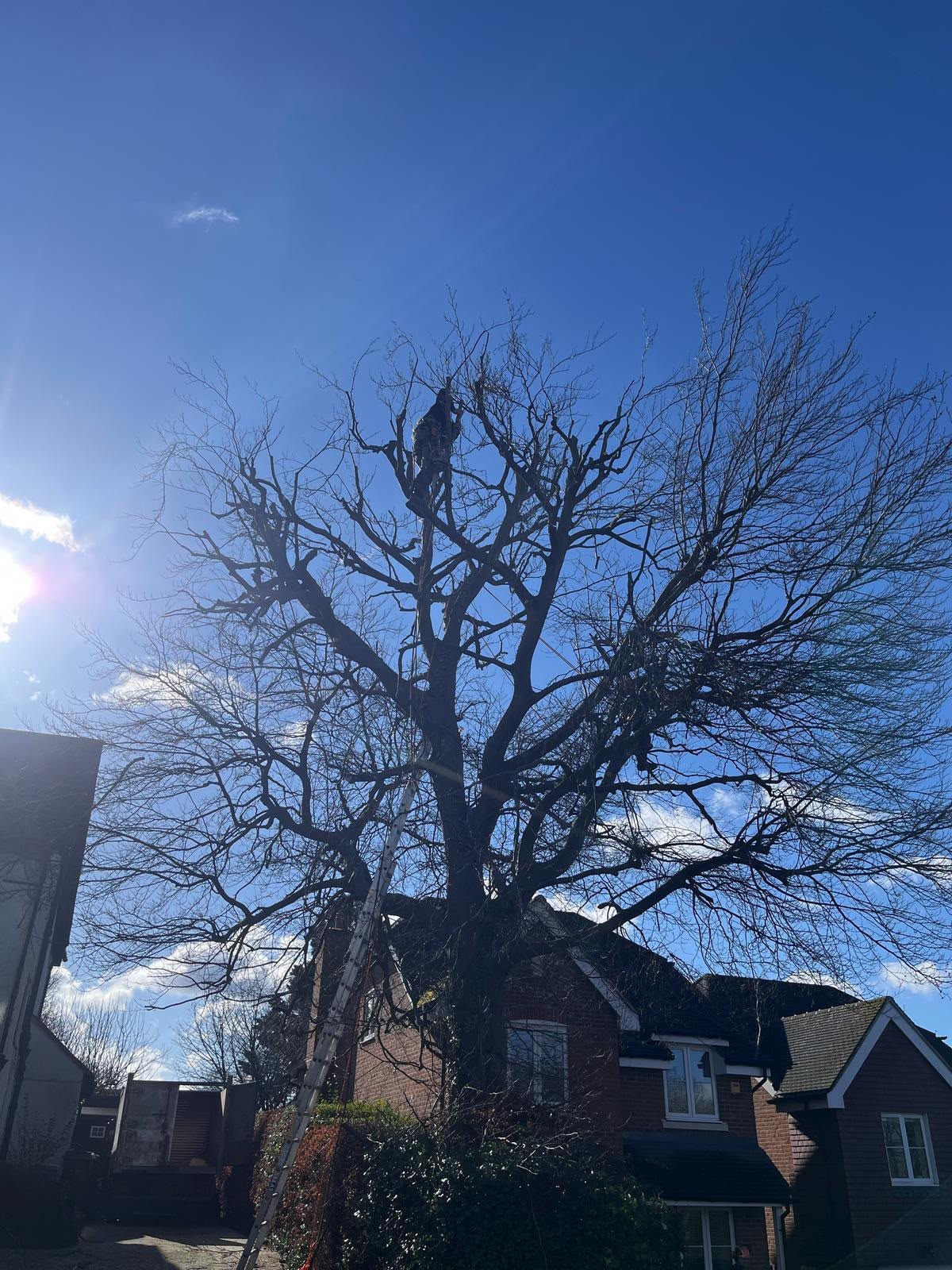
Climber high in a mature bare tree carrying out a crown reduction, sunburst behind the canopy
Careful reshaping · protects the tree · Amersham & Buckinghamshire

Crown Reduction,Thinning & Liftingin Amersham.

Reduce the size, weight and density of your tree's canopy — protecting the tree's long-term health, your property, and the light in your garden — done to proper arboricultural standards.

Fully qualified & ticketed climbers · 10+ years' experience · TPO paperwork handled · Guarantee on every job.

  • 10+ Years' Experience
  • Fully Qualified & Ticketed
  • Registered Waste Carrier
  • Guarantee on Every Job
  • Free Site Visits & Quotes

Overview

Crown Reduction, Thinning & Lifting — what it is and when it's needed.

What it is

Crown reduction reduces the overall size of a tree's canopy while keeping its natural shape. Crown thinning removes a percentage of the internal branches to reduce weight and let more light through. Crown lifting raises the lowest branches to give clearance over gardens, drives, paths and roads. Done together or separately, they're the three most common ways a mature tree is kept in balance without being butchered.

Who it's for

Homeowners with mature trees that have grown too large for the plot, landlords managing overhanging boundary trees, estate managers looking after avenues and specimen trees, and commercial premises with liability concerns over car parks and pedestrian routes.

When it's needed

When a tree is blocking light into the house or garden, sitting too heavily over a roof or extension, throwing branches too low over a driveway or public path, catching too much wind for its root plate, or simply outgrowing the space it's in. These aren't jobs that need doing every year — a good reduction typically holds shape for several seasons before a lighter follow-up.

Why professional help matters

The wrong cut in the wrong place is worse than no cut at all. Topping — flat-cutting the leader — triggers dense, weakly attached regrowth that is more dangerous than the original crown. Proper reduction works branch by branch, cutting back to a suitable secondary growth point so the tree heals cleanly and keeps its natural outline. That takes climbing skill, an eye for tree form, and a willingness to say no when a client asks for something that would harm the tree.

What happens if it's ignored

Small problems don't stay small.

Mature trees don't send warnings the way a boiler does. By the time a large limb sheds itself over a fence or a canopy blocks half the garden year-round, the problem has been building for years.

Structural failure

Over-heavy, unbalanced or wind-loaded canopies are the leading cause of large-limb failure on suburban trees.

Property damage

Overhanging limbs abrade roof tiles, block gutters, drop debris on cars, and can drive expensive repairs after a single storm.

Loss of the tree

Ignored trees eventually get 'solved' with topping or felling. Neither is necessary if reduction is done at the right point.

Neighbour disputes

Overhang across a boundary line is a common source of formal complaints and legal notices. Regular reduction avoids it.

Reduced light and garden use

Dense, low canopies kill lawns, shade patios and turn conservatories into caves — a fixable problem with proper thinning and lifting.

Common mistakes we see

The most common mistake is asking a general gardener to 'take some off the top'. Flat-topping ruins the tree's structure and voids any hope of a natural outline returning. The second is leaving it too long — a proper reduction on a manageable tree costs a fraction of a full removal after a failure.

Our Process

A clear step-by-step system.

  1. 01

    Site Visit & Objectives

    We come out for a free site visit, look at the tree, and talk through what you want to achieve — light, clearance, weight reduction, general reshape — and what's realistic without harming the tree.

  2. 02

    Diagnosis & Percentage

    We assess species, age, vigour and previous work, and agree a specific reduction percentage and shape — usually 15–30% depending on species and tolerance — plus any thinning and lift height.

  3. 03

    TPO / Conservation Check

    If the tree is protected, we prepare and submit the application or notification to the council on your behalf. You don't chase anything.

  4. 04

    Careful Climbing & Cuts

    A qualified climber works through the canopy, cutting back to appropriate secondary growth points, thinning where light is needed, and lifting the crown to the agreed clearance.

  5. 05

    Clean-Down & Guarantee

    Arisings chipped or removed, site left tidy, and the finished shape checked from the ground. Guarantee on every job.

Why it's worth doing properly

The benefits — concrete, not vague.

Better light

Real light back into rooms, patios and lawns without losing the tree.

Longer tree life

Balanced, weight-reduced trees hold up better in wind and live longer.

Property protection

Roof, gutters, glass and cars all move out of harm's way.

Natural shape retained

Cuts made to secondary growth points, so the tree recovers with a natural outline.

Fewer big bills later

A £X reduction now beats a much larger removal after a failure.

Neighbour relations

Overhang controlled before it becomes a formal dispute.

In detail

Everything you'd want to know before booking.

Methods, materials, variations and the specific situations this service applies to — so you know exactly what you're paying for.

Crown reduction vs topping — the difference matters

Topping is a flat, horizontal cut across the leader and main limbs. It's fast, cheap and destructive. The tree responds by throwing dense, epicormic regrowth from the cut point — sometimes called 'water shoots' — that is weakly attached and grows back to roughly the original height within a few seasons, only now the tree is structurally compromised. Proper reduction cuts each limb back to a suitable lateral growth point, following the tree's natural form. It costs more time, holds shape for far longer, and does not shorten the life of the tree.

Species we most commonly work on in the Home Counties

Buckinghamshire has a very typical mix of mature suburban and rural trees — most respond well to careful reduction when it's timed and specified correctly.

  • English oak (Quercus robur) — tolerates light reductions well; avoid heavy cuts
  • Beech (Fagus sylvatica) — thin sparingly, does not respond well to heavy reduction
  • Ash (Fraxinus excelsior) — increasingly reduced or removed due to ash dieback
  • Sycamore, lime, horse chestnut — vigorous and reduction-tolerant
  • Silver birch — light reduction and lifts only
  • Leyland cypress, Lawson cypress — reduce carefully, do not cut into old wood
  • Fruit trees — reduction and thinning as part of ongoing productive care

Crown lifting for driveways, paths and highways

Crown lifting removes the lowest branches to give a target clearance — typically 2.4m over paths and gardens, higher over driveways, and up to 5.2m over highways. It's often the simplest fix for low branches scraping vans, blocking sight lines onto a road, or dragging across a lawn every time you mow. We agree the clearance up front and cut only what's needed to achieve it.

Timing and season

Most broadleaf reductions can be carried out through late summer, autumn and winter. Specific species (birch, walnut, maples) bleed heavily if cut in late winter/early spring — we'll advise the right window when we quote. Nesting bird season (March–August) is checked on every job in line with the Wildlife & Countryside Act.

Recent work

Photos from real crown reduction, thinning & lifting jobs.

Recent projects across Amersham and the surrounding Buckinghamshire villages.

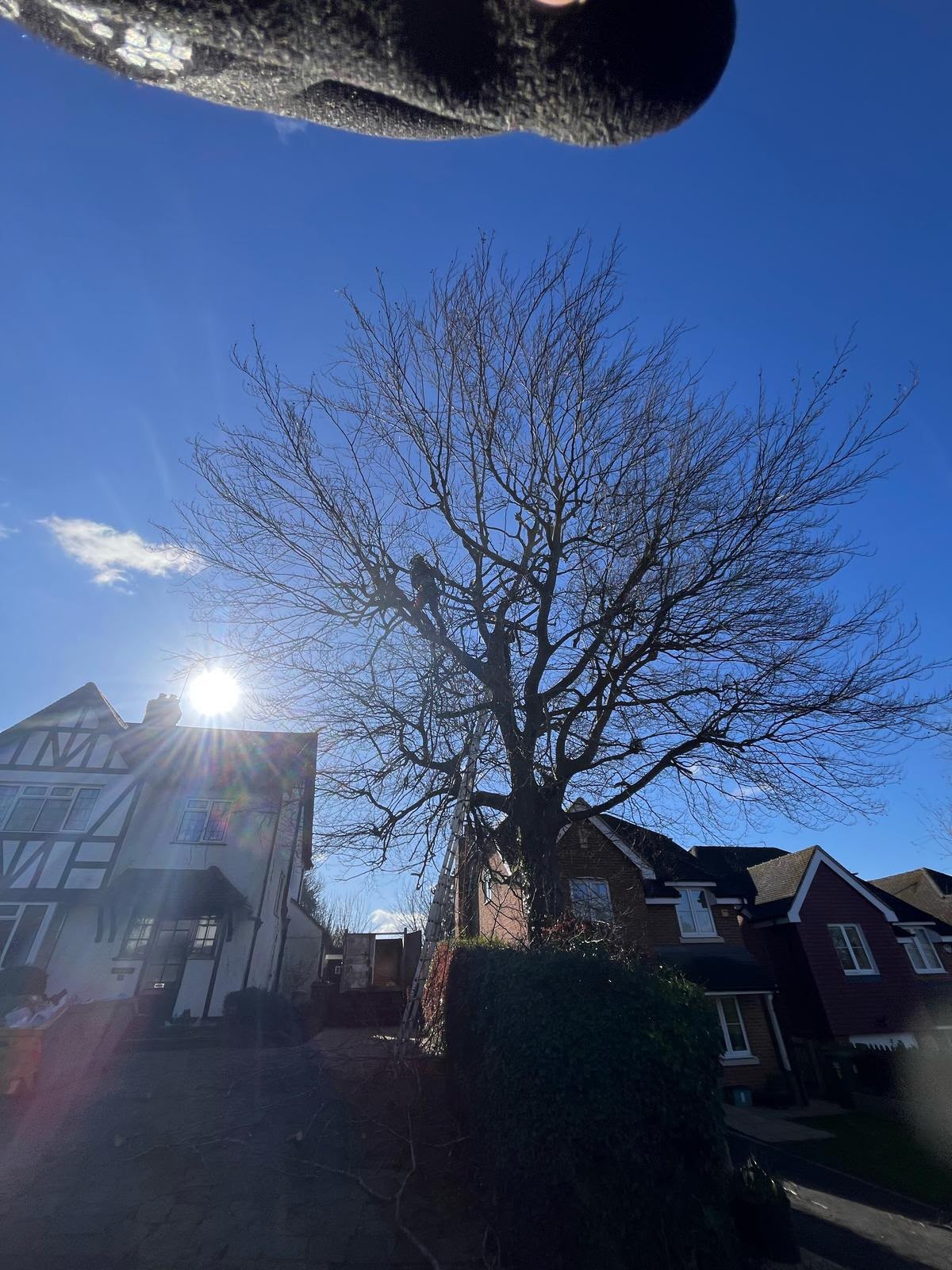
Climber high in a mature bare tree carrying out a crown reduction against a blue sky
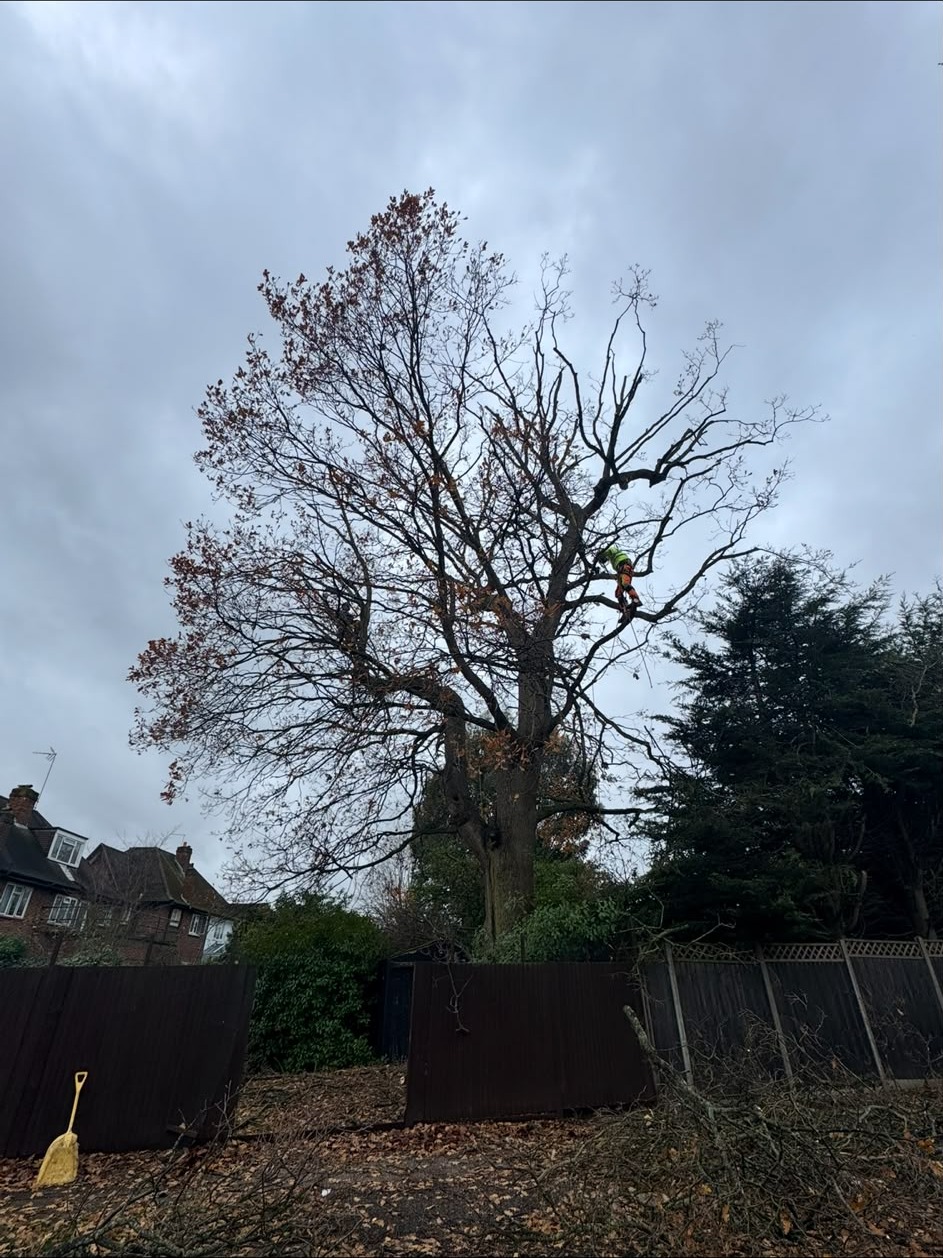
Tree surgeon reducing the crown of a large deciduous tree over a residential property
Arborist working high in a mature oak carrying out a canopy reduction

FAQ

Answers to the questions we get most.

Don't see yours? Give us a call on 07777 722212 — happy to talk it through.

What percentage will you reduce my tree by?

Typically 15–30% depending on species, age and objectives. We agree the exact figure on site — we won't quietly go bigger than what was agreed.

How much does crown reduction cost in Amersham?

Every tree is different: species, size, access, waste disposal and TPO status all change the price. We visit for free and give you a fixed written quote.

How often does the work need repeating?

A well-executed reduction typically holds shape for 3–5 years on most species before a lighter follow-up is worthwhile. Vigorous species (willow, poplar, sycamore) may need more frequent attention.

Will my tree recover?

Yes, when the work is done properly. We cut back to appropriate growth points so the tree seals cleanly and continues to grow naturally.

Do I need council permission?

If your tree has a TPO or you're in a conservation area, yes. We prepare and submit the application or notification on your behalf as standard — or you can submit it yourself if you'd prefer.

Can you take just one side of the tree?

Where it makes arboricultural sense, yes. Where a one-sided cut would unbalance the tree, we'll explain why and suggest an alternative that protects the tree.

Do you top trees?

No. Topping is destructive and shortens the tree's life. Where a height reduction is genuinely needed, we use proper reduction cuts back to lateral growth points.

What happens to all the wood and brash?

It leaves with us. Timber, brash and chippings are removed under our Environment Agency waste carrier registration. Logs can be left on site for firewood if you'd like.
Related services

Tree Maintenance

Learn more

Tree Pollarding

Learn more

Tree Removal

Learn more
← HomeAll servicesService areasContact

Ready for a free, no-obligation quote?

Local Amersham team. Fully qualified & ticketed. Registered Waste Carrier. Guarantee on every job. Fixed written price before we start.

Get My Free Quote 07777 722212
Call NowGet Free Quote